Locksmith Services
Most people call a locksmith about once a decade
Which means almost nobody knows what they are buying. You call a plumber every couple of years and you have a rough sense of what a tap costs and how long a job takes. A locksmith is different: years pass, then something goes wrong, usually at an inconvenient hour, and you are making a decision quickly with no reference points at all. That gap is where the trade's poor reputation comes from, and it is not really about dishonesty so much as about nobody explaining anything.
So this page is the explanation rather than a sales pitch. What is actually on the van, what happens in the half hour after somebody arrives, why a good engineer asks so many questions on the phone, what non-destructive entry means in practice, and what a fair invoice looks like when it lands. None of it is complicated. It is simply never written down anywhere you would find it before you need it.
The short version, if you read nothing else: the phone call matters more than anything that happens afterwards. Thirty seconds describing your door decides which parts travel, which decides whether the job finishes on the first visit. And a price given before anybody sets off is the single most reliable indicator that the price will not change when they arrive.
What Happens During a Visit
The half hour after an engineer arrives is mostly predictable. What makes a job go well or badly is decided earlier, in the two minutes on the phone before anybody sets off.
What Is Actually in the Van
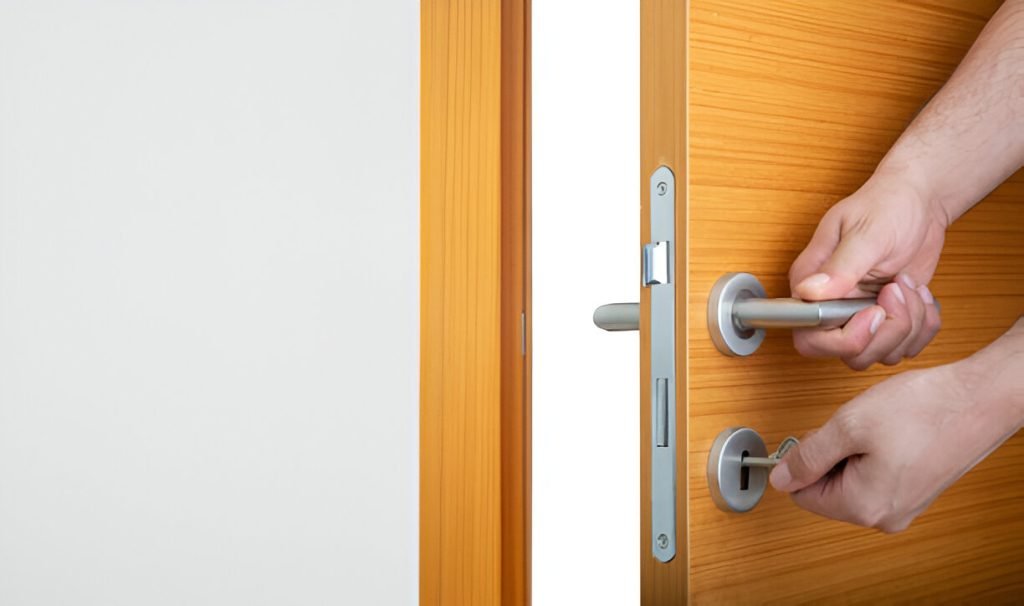
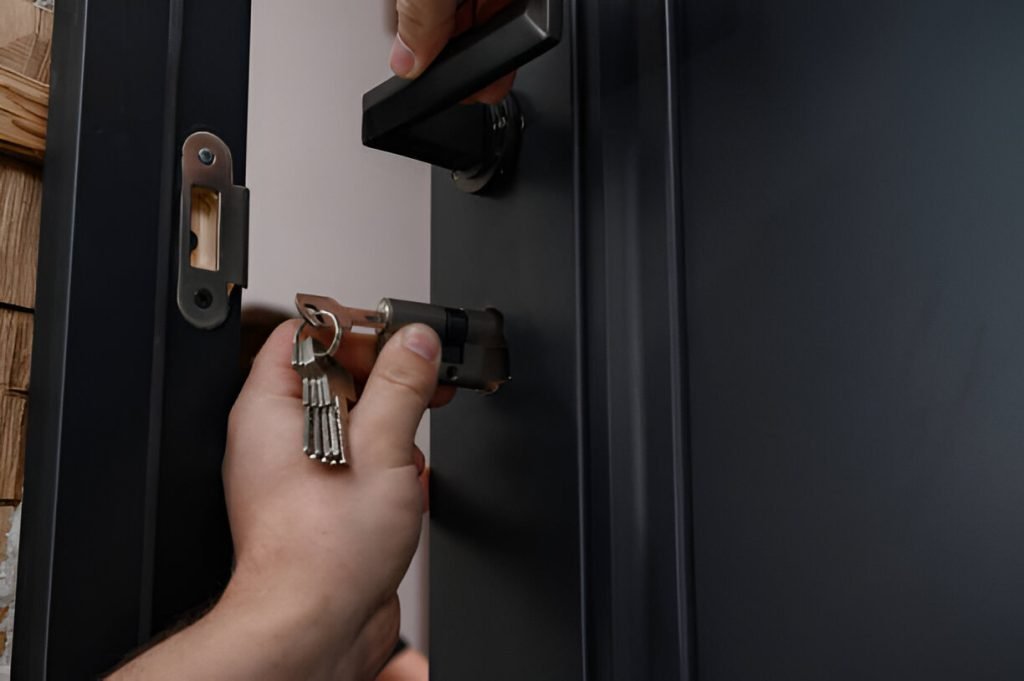
A stocked van is the difference between finishing today and coming back Thursday. Ours carries picking and bypass tools, euro cylinders in the common sizes, mortice cases, rim nightlatches, multipoint gearboxes, key blanks and a cutting machine, plus the smaller hardware nobody thinks about until it is missing: keeps, strike plates, hinge bolts, handle springs. That inventory is why a description on the phone is useful. It tells us what to reach for before we leave.
Every Service We OfferWhat Non-Destructive Entry Means
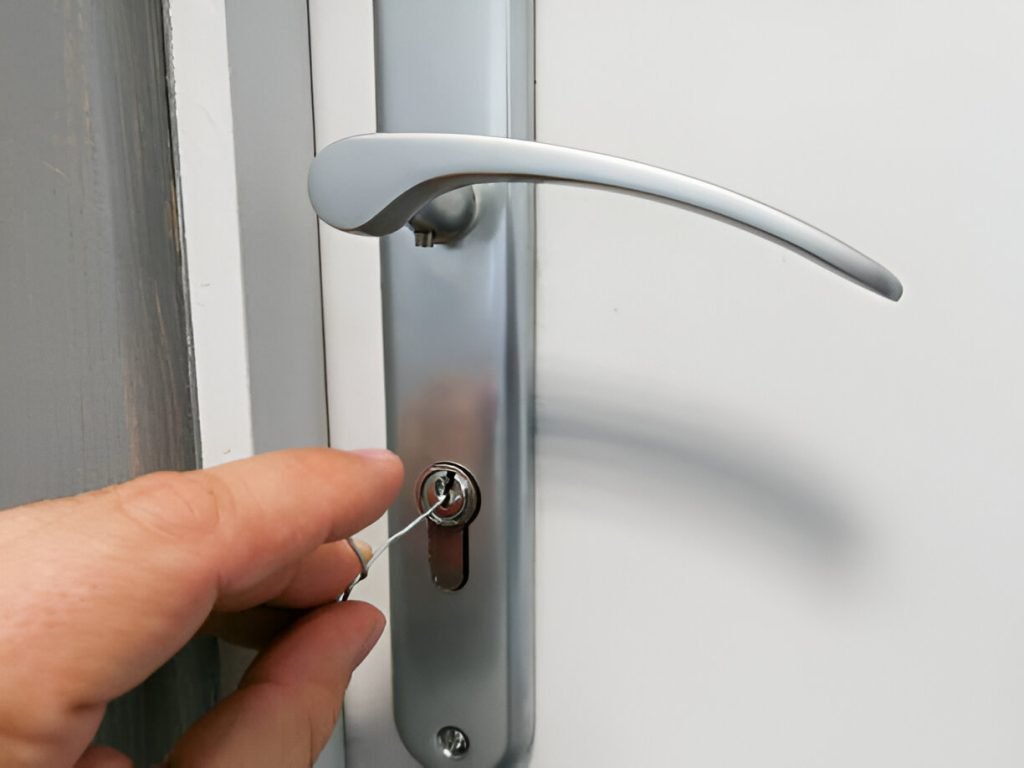
It means opening a lock using the lock, rather than removing it. Picking, bypassing a latch, or manipulating a mechanism so it does what it was built to do. Done properly you keep the cylinder you already own and pay for the visit rather than the hardware. Drilling exists as a last resort for mechanisms that have already failed internally or that resist picking by design, and an engineer should tell you before it happens and explain why, rather than reaching for a drill on arrival.
Locked Out Right NowWhat a Fair Invoice Looks Like
It names things. The make, model and standard of any lock fitted, the labour separately from the parts, the date, and the guarantee. That matters beyond tidiness: it is what an insurer wants after a claim, what a letting agent asks for, and what the next locksmith needs in order to supply a matching part in five years. An invoice that says only “lock change” and a figure tells nobody anything, including you.
Insurance-Grade StandardsWhy the Phone Call Decides the Job
- The engineer takes the call — so the description of your door reaches the person choosing what to load, without being summarised by anyone in between.
- Non-destructive first, and drilling explained — you are told before a drill comes out, and why, rather than discovering it afterwards on the invoice.
- Parts named on the paperwork — make, model and standard, because “new lock fitted” is not much use to an insurer or to the next engineer.
- 180-day warranty on locks, lifetime on keys — a real guarantee on a real invoice from a company at a checkable address.
Our Process - What Happens When You Call
- Two minutes on the phone. What the door is, what it is doing, and where you are. This is the part that decides everything else, so it is worth answering properly.
- A price, and an arrival window. Given before anybody moves, including the out-of-hours rate if it applies. If the job can wait until morning at a lower rate, we will say so.
- Diagnosis on the doorstep. A few checks before anything is opened or removed, because a surprising number of faults are not what they appear from the inside.
- The work, then the paperwork. Opened or repaired, tested with you from both sides, and an itemised invoice naming what was fitted and what it is guaranteed for.
Why Choose N1 Locksmiths?
You speak to the person doing the job
One conversation, no call centre, and no repeating yourself to somebody who is only taking down an address.
Priced on the call, before we travel
The figure you are given is the figure on the invoice. Anything that would change it gets discussed before the work, not after.
Non-destructive wherever the lock allows
Most openings leave the cylinder working exactly as it was, so you pay for the visit rather than for hardware you did not need.
180-day warranty on locks, lifetime on keys
Written on the invoice with the products named, so the guarantee is something you can actually hold us to.
A stocked van, not a catalogue
Common cylinders, mortice cases, gearboxes and key blanks travel with us, which is why most jobs finish on the first visit.
15–30 minutes across N and NW
Worked from 37 Holloway Road in N7, an address you can look up before you let anybody near your door.

Two minutes now saves a second visit
It is worth answering the questions properly when you ring, even when you are cold and irritated and would rather someone just came. Timber or plastic. One keyhole or two. Does the handle lift before the key turns. Does it behave differently with the door open. Each answer changes what leaves with the engineer, and between them they decide whether this finishes today or becomes a return trip with the right part. Give us those and you will have a firm price and a realistic time, typically arriving within 15–30 minutes across the N and NW postcodes.
Message on WhatsAppCALL 020 7129 7496Explore Our Locksmith Services
If you already know what you need, these are the pages that cover it in detail. If you do not, that is entirely normal — ring and describe the door instead, because working out which job it is happens to be the part we are best placed to do.
Areas We Cover Across London
We work from 37 Holloway Road in N7 and cover N1 to N22 and NW1 to NW11, which is close enough to a full sample of London locksmithing to keep a van interesting. A morning might be a slipped latch on a communal door in Islington, an afternoon a set of keys cut for a family in Finchley, and an evening a uPVC back door in Archway that has not locked properly since the summer. That mix is the reason the van carries what it carries. An engineer who only ever sees one type of door gets very good at one type of door, and North London does not give anybody that luxury.
FAQs – Locksmith Services
What does a locksmith actually do, beyond opening doors?
Openings are the smallest part of it. Most of the work is locks changed and repaired, keys cut and rekeyed, doors realigned so mechanisms stop failing, security upgraded to the standards insurers name, and hardware fitted to doors that never had it. Emergency entry is what people picture, but a good week is mostly booked work rather than doorstep rescues.
Will a locksmith damage my door getting in?
Usually not. The large majority of lockouts are opened by picking or bypass, which leaves the door and the existing lock working exactly as before. Damage becomes likely where the mechanism has already failed internally, or on certain high-security cylinders designed to resist manipulation. In those cases you should be told beforehand, with the cost of putting it right included in the quote.
How long does a typical visit take?
A straightforward opening is often ten to twenty minutes. A cylinder change is fifteen to twenty. A mortice lock is around an hour, and a multipoint mechanism ninety minutes or so. Where a door also needs adjusting so the new part is not fighting it, add a little more. Any engineer who cannot give you a rough window on the phone has not asked enough questions.
Do I need to be there while the work is done?
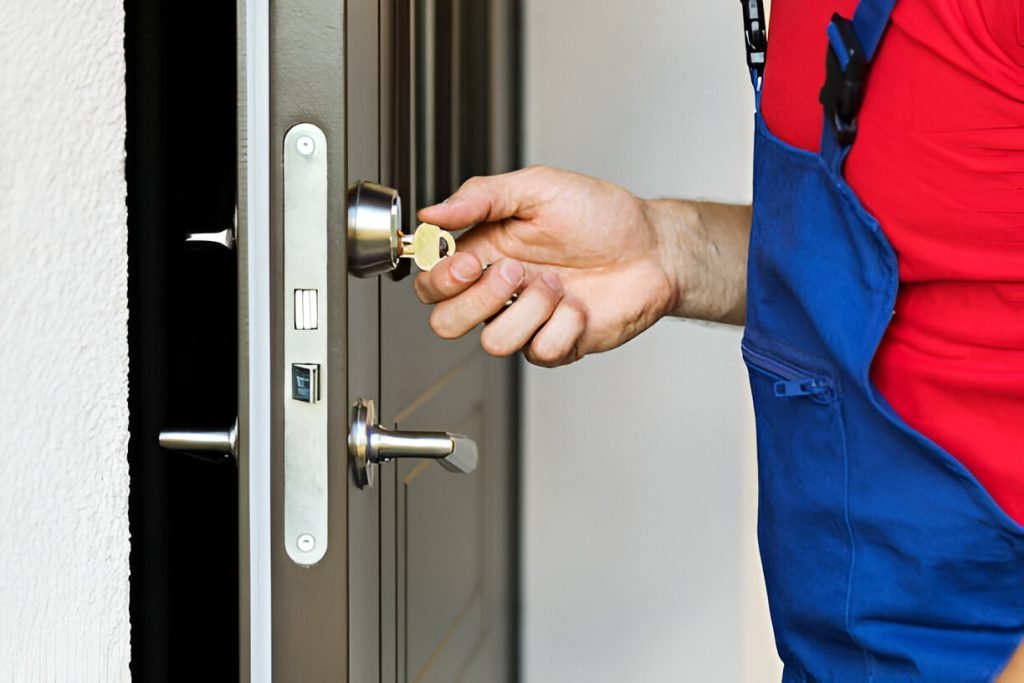
Somebody with authority over the property does, yes. Keys are handed over at the end, the work is tested with you, and on a lock change the old keys are tried in front of you so you have seen for yourself that they no longer work. We would not fit a lock and post the keys through the letterbox, which is how keys end up in the wrong hands.
What should I check before letting somebody start work?
That the price you were quoted has not changed, that they can tell you the address the business trades from, and that you will be given an itemised invoice. Asking what will be fitted and to what standard is reasonable and any competent engineer will answer it happily. Hesitation on any of those three is worth paying attention to.
Can you cut keys at the property?
Yes. The cutting equipment travels on the van, which matters more than it sounds, because every key is tested in your actual door before we leave rather than in a shop three miles away. If one needs a fractional adjustment, that happens on the spot rather than becoming a second trip for you.
Do you work on cars or vehicles?
No, and it is worth saying plainly. Vehicle entry and transponder key programming are a separate trade with separate equipment, and anyone claiming to cover both properly is stretching. If you are locked out of a car we will tell you straight away rather than sending somebody who will struggle when they get there.
Can you help with windows, garages and outbuildings?
Yes. Window locks, garage side doors, up-and-over garage locks, shed hasps and gate padlocks all come up regularly and are often the cheapest security improvements a property can have. They are also the ones most likely to be overlooked, which is exactly why they are worth mentioning when you book something else.
Is it cheaper to wait until the morning?
Frequently, yes, and we will tell you when that applies. Out-of-hours work costs more because somebody is out at three in the morning. If you have a safe place to be and the property is secure, waiting until a daytime slot is genuinely cheaper. If you are shut outside in the cold, or the door will not lock at all, waiting is not really an option and we will come.
What happens if the same problem comes back?
Call us. Locks we supply and fit are covered for 180 days and keys we cut are covered for life. Beyond the guarantee itself, a fault returning usually means something underlying was missed, most often a door out of alignment, and we would rather come back and sort that than have you conclude the part was cheap.
How do I book?
Call 020 7129 7496 or message on WhatsApp, at any hour. Have your postcode, whether it is a house or a flat, and a description of the door and what it is doing. Two minutes on the phone gets you a realistic arrival time and a price that will not change when we get there.