Professional Locksmith

Nobody has to pass anything to call themselves a locksmith

It surprises most people, so it is worth stating plainly. Locksmithing in the United Kingdom is not a licensed trade. There is no register you must appear on, no examination you must sit and no legal barrier to buying a set of picks, printing a van sticker and taking your first call this afternoon. Gas engineers need Gas Safe registration and electricians work within recognised schemes. A locksmith needs a phone.

That is not an argument that the trade is full of chancers, because it is not. Most people doing this work have spent years learning it and care a great deal about doing it properly. But it does mean the word professional carries no official weight on a locksmith's website. It is a claim rather than a credential, and every single competitor you are comparing us against will be making it in the same font.

So the only useful thing this page can do is set out what can actually be checked, and then show you ours. Some of it is dull — a company number, an address, an invoice that names parts. Dull is rather the point. In an unregulated trade, the boring verifiable things are worth more than any adjective, because they are the ones somebody cannot simply decide to write about themselves.

How Professional Work Shows Itself

In a trade with no licence, the useful question is not whether somebody calls themselves professional. It is which of their claims you could disprove in five minutes if you wanted to.

What There Is to Check Instead

Four things, none of which take long. A registered company number you can look up, which shows how long the business has existed and who runs it. A trading address that resolves to a real place. Membership of a trade body if they claim one, which can be verified on that body's own directory rather than from a logo on a website. And insurance, which any established firm will provide in writing if you ask before work begins. Ours is company 15623694 at 37 Holloway Road, N7 8JP, and we are happy to provide insurance details on request.
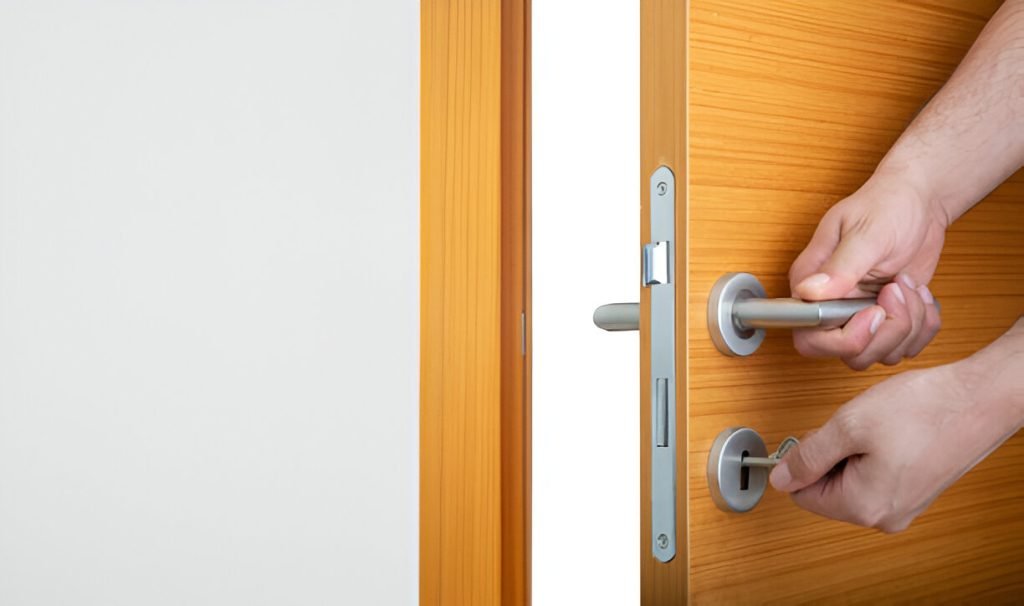
Checking a locksmith company registration before booking in North LondonChecking a Locksmith Out

Fitted to a Standard, Written on Paper

Competence shows up in what goes on the door and whether anybody writes it down. A five-lever mortice deadlock to BS3621 on a timber door, a TS007 3-star cylinder or a 1-star cylinder behind a 2-star handle on uPVC and composite. Those are the terms your insurer uses. An invoice naming the make, model and standard of what was fitted is the difference between a receipt and a record, and it is what a claim, a renewal or the next engineer will need.
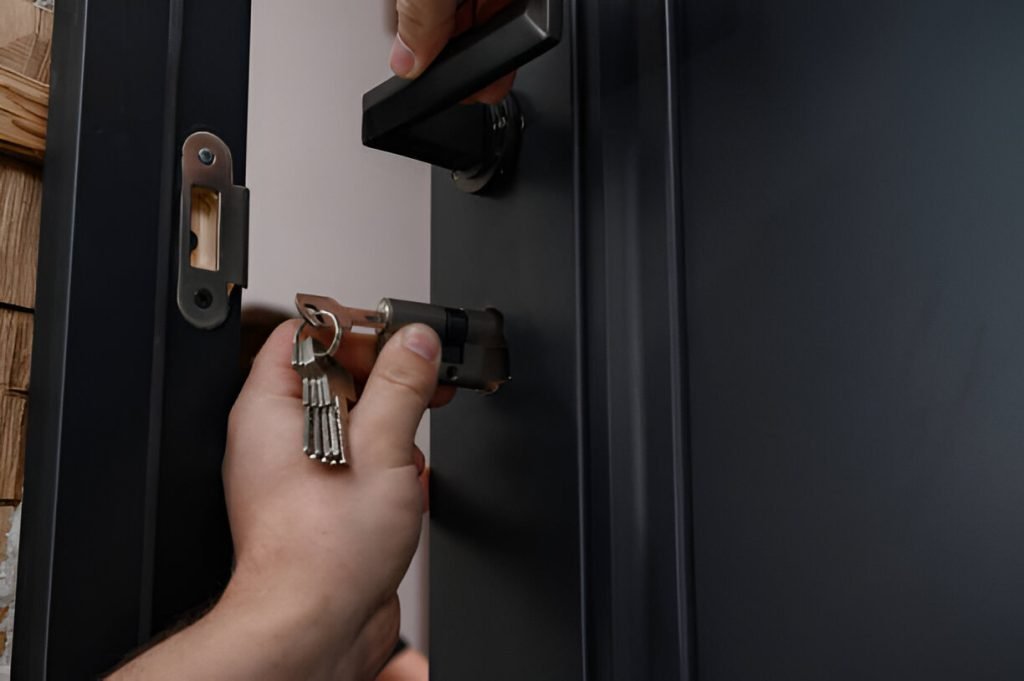
Locksmith fitting a BS3621 mortice deadlock to a timber door in North LondonInsurance-Grade Lock Changes

Knowing When Not To Do The Work

The clearest sign of an experienced engineer is how often they talk you out of something. A door that needs adjusting rather than a new mechanism. A cylinder that only needs rekeying rather than replacing. A grille that should not go on a bedroom window at all. Every one of those conversations costs money to have and earns trust that outlasts the job. Somebody who has an answer for everything and a part for every answer is selling rather than diagnosing.
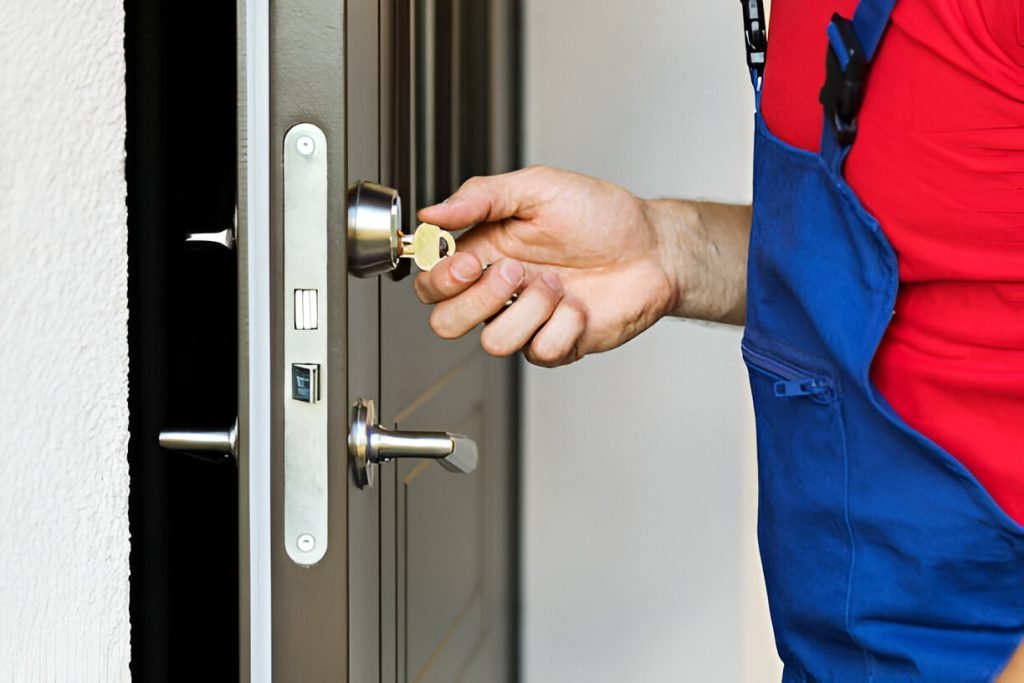
Locksmith advising a customer that a repair is not needed in North LondonTurning Up and Standing By It

Why We Publish What Can Be Checked

  • A company number and an address — 15623694, trading from 37 Holloway Road, N7 8JP since 2018. Both can be looked up before you ring.
  • Standards named rather than implied — BS3621 and TS007 3-star are what insurers ask about, so they are what we quote and what appears on the invoice.
  • Insurance details on request — ask us, or anyone else, in writing before work begins. It is a reasonable question and a straightforward one to answer.
  • 180-day warranty on locks, lifetime on keys — written on the paperwork, from a company that can still be found when you need it.

Our Process - What Happens When You Call

  1. Ask what will be fitted, and to what standard. A competent engineer answers that in plain terms before starting. If the answer is only a price, ask again.
  2. Get the quote before anybody travels. Including the out-of-hours rate. A firm that will not price until it is standing in your hallway has told you something.
  3. Expect a diagnosis, not a product. The first few minutes should be checks and questions. Anybody reaching for a drill or a catalogue on arrival has skipped the actual work.
  4. Keep the invoice, and read it. Make, model, standard, labour, date and guarantee. It is the only durable evidence that the job was done properly.

Why Choose N1 Locksmiths?

You speak to the person doing the job

Technical questions get technical answers, because the person on the phone is the person who will be at your door.

Priced on the call, before we travel

Quoted against the door you describe and the hour of day, and it is the figure that appears on the invoice.

Insurance-grade hardware, named

BS3621 mortices and TS007 3-star cylinders, written on your paperwork by make and model rather than described as high security.

180-day warranty on locks, lifetime on keys

Guaranteed in writing, which in an unregulated trade is worth more than any badge on a website.

Advice that sometimes loses us the sale

An adjustment instead of a mechanism, a rekey instead of a cylinder. We would rather be right than busy.

Eight years at one address

Company 15623694, trading since 2018 from N7. Longevity is difficult to fake and easy for you to check.

N1 Locksmiths engineer fitting an insurance grade lock in North London
Professional Locksmith

Ask us something difficult

The most useful test of an unregulated trade is a specific question asked before you commit to anything. What standard should my front door be at. Would you rekey this or replace it. Does my cylinder stand proud of the handle, and does that matter. You will get a straight answer, including the answers that cost us the sale, because in a trade where anybody can print professional on a van the only real credential is what happens when a customer asks something awkward. Ring 020 7129 7496 at any hour, with an engineer usually reaching you within 15–30 minutes across the N and NW postcodes.

Message on WhatsAppCALL 020 7129 7496

Explore Our Locksmith Services

These pages cover the rest of what is worth checking before you let anybody near your locks, along with the work where competence shows up most plainly — standards on a front door, hardware cut into timber, and keys accounted for across a building.

Areas We Cover Across London

We work across N1 to N22 and NW1 to NW11 from 37 Holloway Road in N7, and the range of housing here is a large part of what keeps the work honest. A morning spent on an original panelled door in Canonbury and an afternoon on a composite door in Barnet demand genuinely different skills, and an engineer who only ever did one would struggle at the other. Conservation streets through Hampstead, Highbury and Barnsbury bring doors nobody should be cutting about carelessly. Mansion blocks and estates around Holloway and Archway bring communal systems and shared responsibilities. Doing all of it competently, week after week, on the same streets, is the only version of professional that means anything in a trade with no licence to lose.

FAQs – Professional Locksmith

Do locksmiths need a licence in the UK?

No. There is no mandatory licence, register or qualification required to trade as a locksmith in the United Kingdom. Anyone may set up tomorrow. That is not an accusation about the trade, most of which is competent and careful, but it does mean the responsibility for checking falls on the customer in a way it does not with gas or electrical work.

What is the Master Locksmiths Association?

It is a voluntary trade body whose members are inspected and vetted as a condition of membership. Membership is not compulsory and plenty of skilled locksmiths are not members, so its absence proves nothing on its own. What matters is that if a company displays any trade body logo, you can check the claim on that body's own directory rather than taking the logo at face value.

Are locksmiths police checked or vetted?

There is no universal requirement for it. Some trade bodies vet their members as part of membership, and some individual firms arrange checks for their engineers, but there is no national standard that applies to everybody. If vetting matters to you — and for work in a communal building or with vulnerable residents it reasonably might — ask the firm directly what they do and ask for it in writing.

What qualifications can a locksmith actually hold?

There are recognised training courses and assessments run by trade bodies and private training providers, and many engineers hold them. None are legally required. Experience on the specific door types in your area is often a better predictor of a good outcome than a certificate, which is why asking what somebody works on daily tells you more than asking what they have passed.

How do I check a locksmith company is genuine?

Look the company number up on the public register and see when it was incorporated and who runs it. Check the trading address exists. If a trade body is claimed, verify it on that body's directory. Ask for insurance details in writing. Four checks, five minutes, and they are difficult to fake in a way that a website is not.

Should I ask about insurance before work starts?

Yes, and it is an entirely normal question that should not cause any awkwardness. Ask for it in writing before anybody touches your door. An established firm will provide it without hesitation, and we are happy to provide ours on request. Hesitation or vagueness at that point is worth taking seriously.

Which lock standards should a professional be fitting?

For a timber front door, a five-lever mortice deadlock to BS3621 is what most home insurance wording expects. For uPVC and composite doors it is a TS007 3-star cylinder, or a 1-star cylinder paired with a 2-star security handle. Anyone quoting for a lock change should be able to tell you which of those applies to your door without being prompted.

Does professional mean expensive?

It usually means the opposite over time. An engineer who diagnoses properly fits the part that was actually needed, which is frequently the cheaper one, and does it in a way that does not come back. The expensive outcome is paying twice: once for a mechanism that was never the fault, and again for the adjustment that should have been done first.

What can I do if work turns out to be substandard?

Start with the company that did it, in writing, and give them the chance to put it right. A firm with a fixed address and a guarantee generally will. If that fails, the usual consumer routes apply through your local trading standards service or Citizens Advice, and paying by card can offer additional protection. This is also the practical reason an itemised invoice matters so much.

Do you work to a different standard for commercial customers?

The workmanship is identical; the paperwork is heavier. Commercial and managing agent work usually needs itemised invoicing suitable for accounts, records of what was fitted where, and coordination around trading hours or resident access. The standards on the door are the ones the building requires rather than a separate commercial tier.

What is the best way to get a technical answer before booking?

Ring 020 7129 7496 and ask the question directly, or send a photograph of the door on WhatsApp. You will get a straight answer from someone who fits these locks daily, including where the honest answer is that your door does not need what you were thinking of buying.

Trusted Professional Locksmith Services You Can Rely On

A company number and an address you can check, standards named on the invoice, insurance details on request, and honest advice even when it means we fit less than you expected.

Call NowBook Now