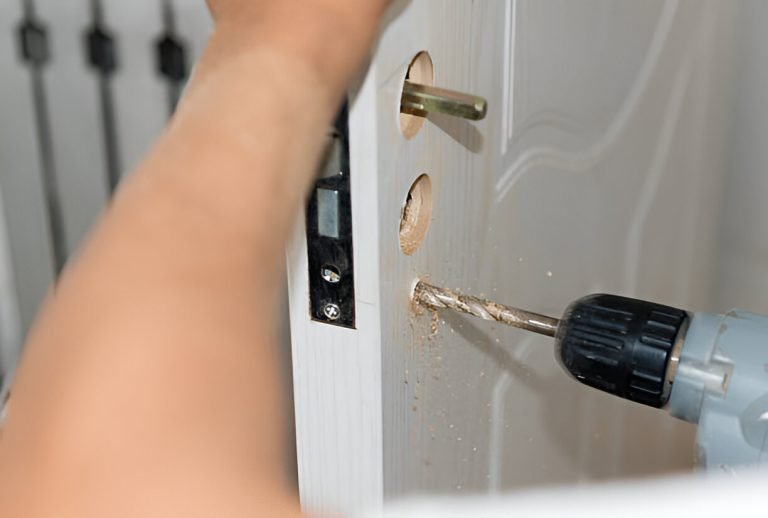
Lock Replacement
The lock rarely fails first. Something else usually pushes it over
A lock is a mechanism doing the same movement thousands of times against weather, grit and a door that is slowly moving. It does not decide to stop one morning. What normally happens is that something else changes — hinges settle, a frame swells through a wet autumn, a handle develops play — and the lock spends months absorbing a load it was never designed to carry. By the time the key will not turn, the lock has been failing for a while and telling you so.
That is why we diagnose before quoting a replacement. On a uPVC or composite door there are three separate things people call a broken lock: the euro cylinder, the multipoint gearbox buried in the door edge, and the alignment between the door and the frame. Each has a different price and only one of them is the cheap one. Replacing a cylinder when the gearbox has failed is a wasted hour, and replacing a gearbox on a door that has dropped simply feeds a new mechanism into the same problem.
This page is about locks that have genuinely stopped working. If your lock is fine and you are replacing it because of who might hold a key — a new home, a tenant leaving, a key not returned — that is a different job with a different set of questions, and our lock change page covers it. Same visit length, different reasoning, and worth knowing which one you are actually booking.
How We Replace a Failed Lock
Half of the doors we are called to for a broken lock do not need a new lock at all. Finding that out takes five minutes on the doorstep and saves considerably more than it costs.
Working Out Which Part Failed
The tests are quick and we do them on the doorstep. Does the key turn with the door open but not closed? That is alignment, not the lock. Does the handle lift with no resistance and nothing happens? That points at the gearbox. Does the key feel gritty and stiff in both positions? That is usually the cylinder. Five minutes of checking decides whether you are buying a small part or a large one, which is why we never quote a mechanism over the phone.
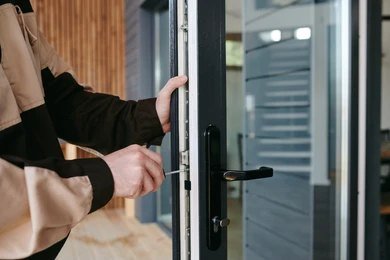
uPVC and Composite DoorsSizing It Properly Before Fitting
A euro cylinder has two measurements taken from the central screw hole, and getting them wrong by five millimetres either leaves the cylinder standing proud where it can be gripped and snapped, or sitting recessed so the key fouls the handle. Mortice locks have their own dimensions — case size and backset — and a lock that nearly fits means enlarging the mortice in a door that did not need it. We measure the door in front of you rather than reaching for a stock length.
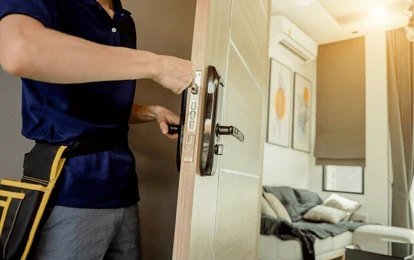
Fitting a Lock From ScratchMortice Locks in Timber Doors
Older timber doors fail differently. Levers wear, the follower that carries the handle develops slop, springs tire so the latch stops returning cleanly, and the case eventually binds. Replacement is usually a like-for-like case size so the existing mortice is reused without chiselling, and it is the natural moment to move up to a BS3621 five-lever deadlock if the door is not already carrying one. The keep and strike plate get adjusted at the same time.
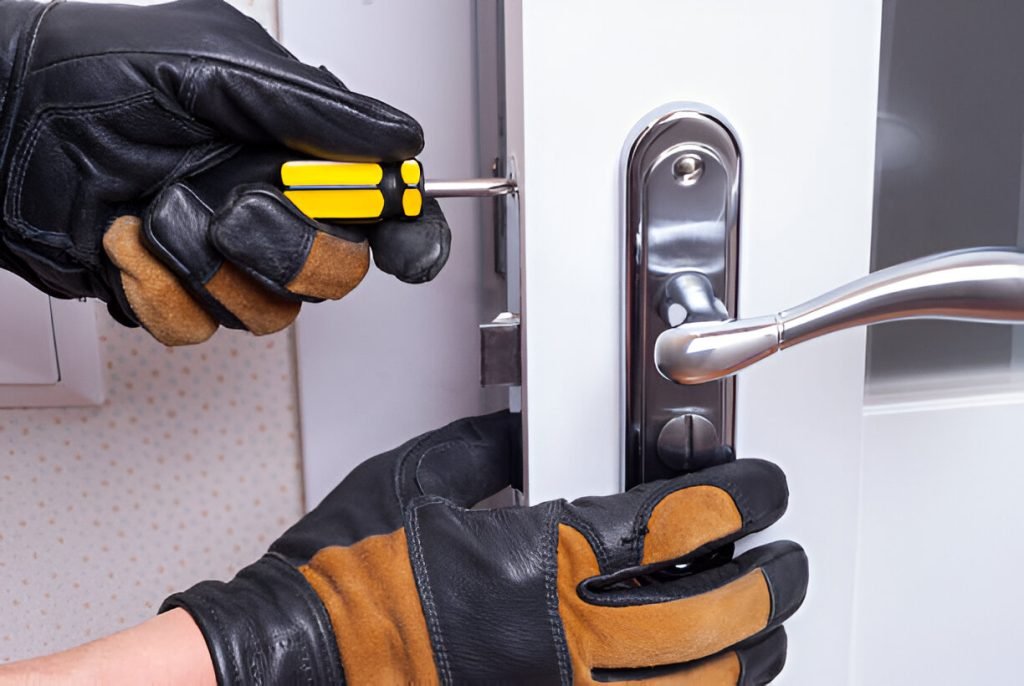
Replacing for Security ReasonsWhy We Diagnose Before We Replace
- Diagnosis before replacement — cylinder, gearbox and alignment are three different faults with three different prices, and we establish which one you have before quoting.
- Measured on your door — cylinder sizes and mortice case dimensions are taken in front of you, because a lock that nearly fits is a lock that will fail early.
- Adjustment included, not charged as an extra — a new mechanism goes into a door that has been set up to work, or it will be back on the fault list within a year.
- 180-day warranty on locks, lifetime on keys — itemised on the invoice with the exact product named, so you know what is in your door.
Our Process - What Happens When You Call
- Describe what the lock is doing. Stiff, spinning freely, key turns but nothing moves, handle lifts with no resistance — each symptom points at a different component and shapes what we load.
- Try it with the door open. If it works perfectly with the door swung open and fights when closed, the lock is fine and the door has moved. Tell us that and it changes the whole quote.
- Diagnosed and priced on the doorstep. We open up what needs opening, identify the failed part, and give you the price for repairing versus replacing before anything is removed.
- Fitted, adjusted and tested properly. New mechanism in, keeps and strike plates adjusted, and the door locked and unlocked repeatedly from both sides before we call it finished.
Why Choose N1 Locksmiths?
You speak to the person doing the job
Describe the symptom once to the engineer who is coming, so the right gearboxes and cylinder sizes are on the van before it leaves Holloway Road.
Priced on the call, before we travel
A cylinder, a multipoint gearbox and a mortice case are very different costs. You hear the range and what decides it before anyone sets off.
Repair quoted alongside replacement
Where a strike plate adjustment or a new follower will genuinely fix it, that is offered as the cheaper option rather than quietly skipped.
180-day warranty on locks, lifetime on keys
Every mechanism we fit is guaranteed, and the invoice names the exact part so a future locksmith knows what is in there.
Parts carried, not ordered
Common cylinders, multipoint gearboxes and mortice cases travel on the van, which is why most replacements finish on the first visit.
15–30 minutes across N and NW
Worked from Holloway Road, so a door that will not lock at five on a Friday does not have to stay that way over the weekend.

Tell us the symptom, not the diagnosis
The most useful thing you can say on the phone is exactly what the door is doing rather than what you think has broken. Key spins freely. Handle lifts but will not lock. Works fine open, fights when shut. Grinding sound halfway through the turn. Each of those points at a different component, and between them they decide whether we bring a cylinder, a gearbox or a screwdriver and twenty minutes of adjustment. Describe it in a sentence and you will have a realistic price before we travel, typically arriving within 15–30 minutes across the N and NW postcodes.
Message on WhatsAppCALL 020 7129 7496Explore Our Locksmith Services
A failed lock often exposes something else that has been building for a while. These are the jobs most commonly booked alongside a replacement — a dropped uPVC door realigned so the new mechanism is not fighting it, a second door brought up to the same standard, or a set of keys cut properly once the new lock is in.
Areas We Cover Across London
We replace locks across N1 to N22 and NW1 to NW11 from 37 Holloway Road in N7, and what fails tends to follow when the door was fitted rather than where it is. The replacement uPVC and composite doors that went into flats and terraces around Archway, Holloway, Kentish Town and Finchley through the 2000s are now old enough that their multipoint gearboxes are reaching the end of their working life, and that is the single most common replacement we carry out. Original timber doors in the conservation streets of Canonbury, Highbury, Hampstead and Islington fail more slowly and more gently — worn levers, tired springs, a latch that stops returning — and they are usually replaced like for like so the door itself is never cut about.
FAQs – Lock Replacement
My key turns but nothing happens. Is the lock broken?
Almost certainly, and on a uPVC door that symptom usually means the multipoint gearbox has failed rather than the cylinder. The key is turning the cam correctly but the mechanism it drives is no longer engaging. It is a bigger part than a cylinder and it lives inside the door edge, so it is worth describing precisely on the phone rather than being quoted for the wrong component.
The lock works with the door open but not when it is shut. Why?
Because the lock is fine and the door has moved. Hinges settle, frames swell, and the bolts stop meeting the keeps squarely, so the mechanism is trying to throw into the wrong place. Replacing the lock does not fix that and the new one will suffer identically. What it needs is hinge adjustment and repositioned keeps, which is a considerably cheaper visit.
How do I know what size cylinder I need?
You measure from the central screw hole outward, in both directions, which gives two figures such as 40/50. Getting it wrong matters: too long and the cylinder stands proud of the handle where it can be gripped and snapped, too short and the key fouls. We measure on the door as part of the visit, so you do not need to work this out yourself before calling.
Can a lock be repaired instead of replaced?
Sometimes, and we will tell you when. Sticky mortice locks often come back with cleaning and proper lubrication, latches can be freed, followers and springs can be changed on some cases, and misalignment is an adjustment rather than a part. A worn multipoint gearbox and a cylinder with worn pins are the two that realistically need replacing rather than reviving.
How long does a replacement take?
A euro cylinder is fifteen to twenty minutes. A mortice case going into an existing mortice is around an hour. A multipoint gearbox is usually an hour to ninety minutes, because the whole strip comes out of the door edge and the door has to be set up properly on the way back. Alignment work on top of any of those adds a little more.
Do you carry the parts, or will you order them?
Common euro cylinders, standard mortice cases and the multipoint gearboxes used across most North London doors travel on the van, so the large majority of jobs finish on the first visit. Older or unusual mechanisms, particularly on aluminium commercial doors and some patio systems, occasionally need ordering, and we tell you that on the doorstep rather than afterwards.
My lock is stiff but still working. Should I wait?
No, and this is the cheapest moment to act. Stiffness means something is already binding, and the force you apply compensating for it is what eventually breaks a key or strips a gearbox. A stiff lock sorted on a weekday afternoon is a small job. The same lock failing completely tends to happen when you are leaving the house or arriving home in the dark.
Is a replacement lock covered by my insurance?
A lock that has simply worn out is maintenance rather than an insured loss, so usually not. Where a lock was damaged during a break-in or attempted break-in, many policies do cover it. We are not insurers and cannot interpret your policy, but the invoice names the parts and the date, which is what a claim needs if you decide to make one.
Can you replace the lock on a communal or shared door?
Only with the freeholder's or managing agent's authority, because it affects every resident and any keys already issued. What we can do is inspect it, tell you precisely what has failed and what it would cost, and put that in writing for you to send to the agent, which usually moves things along faster than a resident describing it second-hand.
Will a new lock come with new keys for all my doors?
It comes with its own keys, and if you want the other doors to take the same one, say so before we fit rather than afterwards. Matching cylinders across doors has to be specified when the parts are pinned, and doing it during a replacement you are already paying for is far cheaper than revisiting the question in six months.
How is a lock replacement priced?
By the part that has actually failed, which is why we diagnose first. A cylinder is the smallest job, a mortice case sits in the middle and a multipoint gearbox is the largest, with alignment work priced separately if the door needs it. You get the price on the doorstep before anything is removed, and the invoice lists parts and labour separately.