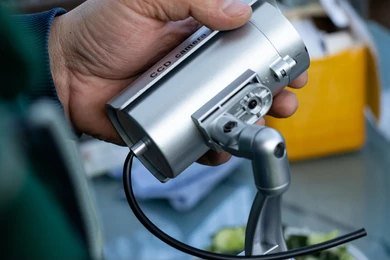
CCTV Installation
Most CCTV records the top of somebody's head
It is the commonest fault we find on systems already installed, and it comes from a reasonable instinct. Cameras get mounted high, out of reach and out of the way, angled down across the whole garden or the whole forecourt. The footage looks impressive on the app. Then something actually happens, you sit down to review it, and what you have is a wide grey view of a hooded figure from above, at a distance, at night. You can see that a person was there. You cannot say who.
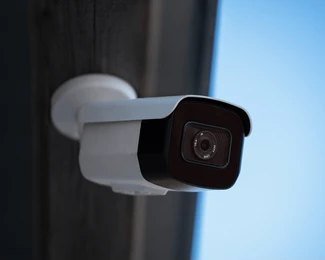
Useful footage comes from thinking about where a person has to be rather than what you want to look at. Everyone entering a property funnels through a small number of choke points: a gate, a side return, a front path, the two metres in front of a door. A camera covering one of those at roughly head height, close in, will identify somebody. A camera on the eaves covering four times the area will not, no matter what the box says about megapixels.
The other half of the job is legal rather than technical, and it gets skipped almost universally. A domestic camera that captures anything beyond your own boundary — a pavement, a shared drive, a neighbour's garden — brings you into data protection obligations, with the Information Commissioner's Office publishing specific guidance for householders. None of that makes CCTV a bad idea. It just means the system should be planned with it in mind rather than discovered afterwards.
How a Camera System Gets Planned
A camera system is a plan first and a product second. Where the cameras go decides whether you get evidence or just confirmation that something happened.
Cameras Where People Have to Walk
We plan a system by walking the property the way an intruder would and marking the points nobody can avoid. A side gate, the end of an alley, the approach to a back door, the two metres in front of the front door. Cameras go at those points, close in and low enough to catch a face rather than a scalp. Three well-placed cameras will out-perform eight badly placed ones, and cost considerably less to install and to run.
Physical Barriers TooFootage the Police Can Actually Use
Recording is not the same as evidence. Footage needs to be sharp enough to identify a face, lit well enough that infrared has not washed everything to white, held long enough that a delayed discovery is still covered, and exportable in a format somebody else can open. We set retention deliberately, check what each camera sees after dark rather than at midday, and show you how to get a clip off the system before you ever need to.
After a Break-InCameras, Neighbours and the Law
If your cameras capture only your own property, data protection rules generally do not apply. The moment they take in a pavement, a shared path or next door's garden, they can, and the Information Commissioner's Office publishes guidance for domestic users covering signage, retention and responding to requests for footage. We angle and mask cameras to stay on your own ground wherever the layout allows, and point you to the ICO where your situation needs a proper look.
Door Entry and IntercomsWhy Position Beats Megapixels
- Position before specification — we walk the property and mark the choke points before anyone talks about how many cameras or which model.
- Checked after dark, not at midday — infrared washout and glare from a security light ruin more footage than low resolution ever does.
- Boundaries considered from the start — angled and masked to stay on your own ground where the layout allows, with the ICO named where it needs a closer look.
- You are shown how to export a clip — before you need it, not while you are on the phone to the police at eleven at night.
Our Process - What Happens When You Call
- Tell us what you are protecting. A front door, a side return, a shop floor, a communal entrance or a yard full of tools. The answer changes camera type and position entirely.
- We walk it and mark the choke points. The places anybody has to pass through. That walk decides the number of cameras, which is usually fewer than people expect.
- Agreed on paper before anything is drilled. Camera positions, what each one will see, where the recorder lives and how long footage is kept, all settled before installation day.
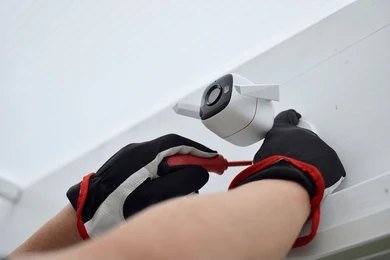
- Installed, aimed after dark, and handed over. Every camera checked in darkness as well as daylight, and you shown how to view, search and export footage before we leave.
Why Choose N1 Locksmiths?
You speak to the person doing the job
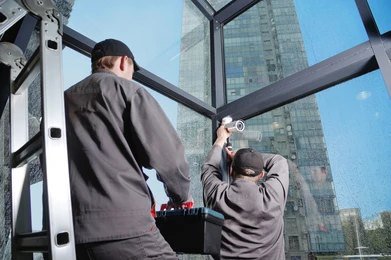
The engineer who walks your property is the one who installs it, so the plan and the installation are the same thing.
Priced after a walk-round
Camera counts quoted over the phone are guesses. We give you the basis of the cost on the call and a firm figure once we have seen the layout.
Fewer cameras, better placed
Three cameras at the points people must pass beat eight on the eaves. It costs you less and gives you footage you can actually use.
Cabled where cable is better
Wireless suits some properties and fails in others. We will tell you honestly which yours is rather than selling whatever is easiest to fit.
Recording checked before we leave
Storage, retention and playback tested on the day, so the system is working rather than merely installed.
15–30 minutes across N and NW
Worked from Holloway Road, so a system that has stopped recording gets looked at quickly rather than next month.

Walk your own property first
Before you call, go outside and walk in as if you did not have a key. Where would you have to pass? A side gate, the end of an alley, a low fence at the back, the path to the front door. Those points are where cameras belong, and there are usually only two or three of them. Tell us what they are and what kind of property it is, and we can give you the basis of a cost on the phone and book a walk-round to plan it properly — with an engineer reaching you within 15–30 minutes across the N and NW postcodes if an existing system has stopped working.
Message on WhatsAppCALL 020 7129 7496Explore Our Locksmith Services
Cameras record what happens; the rest of a system decides whether it happens at all. These are the services most often specified alongside CCTV — barriers on the openings the cameras are watching, door entry on a communal entrance, and the locks themselves brought up to a standard worth filming.
Areas We Cover Across London
We plan and install camera systems across N1 to N22 and NW1 to NW11 from 37 Holloway Road in N7, and the layouts differ enough that the same package would be wrong in half of them. Terraced streets through Islington, Highbury, Canonbury and Holloway are all about the back: rear alleys, side returns and low garden walls that connect one property to the next, so cameras go on the approaches rather than on the front elevation. Detached and semi-detached houses towards Hampstead, Finchley, Barnet and Golders Green have more ground and more ways in, which tempts people into ringing the house with cameras when two or three at the genuine pinch points would do more. Shops along the Camden and Kentish Town high streets are different again, where the till, the door and the stockroom matter more than the frontage.
FAQs – CCTV Installation
How many cameras do I actually need?
Usually fewer than people expect. Most properties have two to four points that anybody entering has to pass through, and covering those properly is worth far more than ringing the building with cameras. We would rather fit three in the right places than eight that each produce a wide, distant view of nothing identifiable.
Will CCTV stop somebody breaking in?
It deters some people and not others, and we would be lying if we promised otherwise. Its real value is afterwards: identifying who, establishing how they got in so the weakness can be fixed, and giving the police and your insurer something concrete. Cameras work best alongside physical security rather than instead of it.
Are dummy cameras worth fitting?
No, and we do not fit them. Anyone who has looked at a few cameras can spot a dummy quickly, and it gives you the confidence of a system with none of the evidence. If budget is the constraint, one real camera on the main entrance is far better value than four fakes around the building.
Wired or wireless — which should I choose?
It depends on the building rather than on preference. Wireless is quicker to install and suits properties where cabling would mean serious disruption, but it depends on your network and on power at each camera. Wired is more reliable and better for continuous recording. In a solid Victorian house with thick walls, wired usually wins.
Is a video doorbell enough on its own?
For a flat with one entrance, sometimes. For a house with a side return, a back garden or a rear alley, no. A doorbell camera covers callers at the front door, which is where legitimate visitors go and rarely where a break-in happens. It works well as one part of a system rather than as the whole of it.
How long is footage kept for?
That is a decision rather than a default, and it is worth thinking about. Too short and a break-in discovered after a weekend away is already gone. Too long and you are storing more personal data than you need, which matters if your cameras see beyond your boundary. We set it deliberately with you and write down what it is.
My camera would see the pavement and next door. Is that a problem?
It brings you into data protection obligations, so it needs handling rather than ignoring. The Information Commissioner's Office publishes guidance specifically for householders using CCTV, covering signage, how long footage is kept and what to do if somebody asks for a copy. We angle and mask cameras to stay on your own property where the layout allows, and point you to the ICO where it does not.
Can you get footage off the system for the police or my insurer?
Yes, and we show you how to do it at handover so you are not learning at the worst possible moment. Export the clip with its date and time intact rather than filming the screen with a phone, and keep the original file. An itemised record of what was fitted and when also helps with an insurance claim.
Do the cameras work at night?
All of the ones we fit have infrared, but that is only half the answer. Infrared washes out badly at close range, glare from an existing security light can blind a camera completely, and a bright street lamp behind a subject turns them into a silhouette. That is why we aim and check every camera after dark rather than signing off in the afternoon.
Can I put cameras up in a block of flats or a shared building?
On your own front door and inside your own flat, generally yes. Anything covering communal stairs, hallways, entrances or bin stores belongs to the freeholder or managing agent and needs their agreement, because it involves other residents' data as well as yours. We can survey it and put a proposal in writing for you to take to them.
How much does a CCTV installation cost?
It depends on the number of cameras, whether it is cabled or wireless and how difficult the runs are, so a firm figure needs a walk-round. We will give you the basis of the price on the phone once we know the property type and roughly what you want covered, then confirm it in writing. Nothing is ordered before you have that.