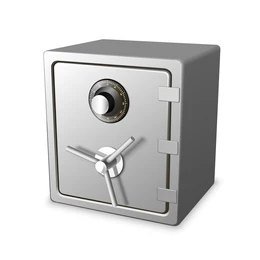
Safe Specialist

An unbolted safe is a box with handles on it

It is the single most common problem we find, and it undoes everything else. A safe sitting in a wardrobe or under a desk, never fixed down, containing passports, jewellery and the deeds. Nobody has to open it in the house. They carry it out to a vehicle and open it somewhere quiet, with time and tools and nobody watching. A domestic safe weighs less than most people assume, and the handle moulded into the side is there to help you position it, not to stop anybody else doing the same.

The second thing that gets missed is the rating. A safe is not simply a strong box; it carries a cash rating and a valuables rating, and those figures are what an insurer works from. Cover for the contents of a safe is usually written against a specific rating, so an unrated cabinet bought cheaply online may protect nothing at all in the terms that matter. The same applies to fire ratings, which are separate again and measured in how long paper or media survives rather than in what it resists being attacked with.

So the useful order of questions is not which safe you like. It is what you are keeping in it, what your policy says it needs, where in the building it can be fixed into something solid, and who needs to be able to open it. Get those four right and the safe itself is close to the easy part.

How We Handle Safe Work

Where the safe goes and what it is rated to matter more than which safe you buy. A well-chosen unit fixed into a slab beats an expensive one standing in a cupboard.

Ratings and What Your Insurer Covers

A safe's cash rating is the amount of cash an insurer will generally cover inside it, and the valuables rating is usually a multiple of that figure. Those numbers, not the thickness of the steel, are what a claim is assessed against. Before recommending anything we ask what your policy specifies, because buying above the requirement wastes money and buying below it can leave you carrying a loss you thought was covered.
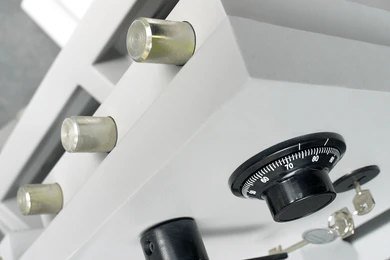
Cash rated domestic safe being specified for a North London homeInsurance-Grade Door Locks

Installed Into Something Solid

Fixing is what turns a container into a safe. Floor safes bolt down through the base into a concrete slab; wall safes are set into masonry and made good around them. On a suspended timber floor, which describes most upper storeys in a Victorian house, that needs planning rather than optimism — either finding a solid location or using a heavier unit whose weight does the work. We survey the position before anything is delivered.
Safe being bolted down into a concrete floor in North LondonFixings and Fitting

Safes That Will Not Open

Forgotten combinations, dead keypad batteries, a lock that has failed internally, or a safe inherited with a property and no code at all. Most of these have a straightforward answer and many can be resolved without damage, though some end in a controlled opening and a replacement lock. Before we start any of that we establish that you are entitled to open it, which we ask of everyone without exception and without apology.
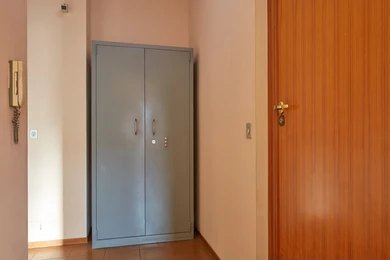
Locksmith working on a safe that will not open in North LondonLost Keys and Codes

Why We Ask Who You Are First

  • Proof of entitlement before any opening — identification and a link to the property or the business, asked of every customer, every time.
  • Specified against your policy, not our stock — tell us the cash rating your insurer names and we work to it rather than upselling past it.
  • Fixed into structure or not fitted at all — if a location cannot take proper anchors we will say so and find one that can.
  • 180-day warranty on locks, lifetime on keys — on safe locks we supply and fit, with the unit and rating named on the invoice for your insurer.

Our Process - What Happens When You Call

  1. Tell us what it is for. Documents, jewellery, cash for a business, or a firearm certificate requirement. Each points at a different rating and sometimes a different type of unit entirely.
  2. Check what your policy asks for. If your insurance specifies a cash rating, that figure decides the specification. It is worth finding before you shop rather than after.
  3. We look at where it can be fixed. Floor construction, wall build-up and access for delivery. An upper floor in a period house often needs a different answer to a ground-floor utility room.
  4. Installed, tested and handed over properly. Anchored, the lock set and tested, the code changed from the factory default in front of you, and the paperwork left with you.

Why Choose N1 Locksmiths?

You speak to the person doing the job

Describe what you are protecting and the right advice comes from the engineer who will fit it, not from a catalogue.

Priced on the call where we can

An opening, a lock replacement and a supply-and-install are quite different jobs, and you hear which is which before anyone travels.

Identity checked, always

We ask everyone to prove entitlement before opening a safe. Anybody who does not ask you that question is worth thinking twice about.

180-day warranty on locks, lifetime on keys

Safe locks and keys we supply are guaranteed, with the make and rating itemised for your insurer.

Non-destructive wherever it is possible

Many safes can be opened without damage. Where they cannot, we tell you the likely outcome and the cost of reinstating it beforehand.

15–30 minutes across N and NW

Worked from Holloway Road, so a business that cannot open its safe before trading is not waiting until next week.

N1 Locksmiths engineer installing and anchoring a safe in North London
Safe Specialist

Tell us the make and what it is for

Two pieces of information make this straightforward. The make and model, usually on a plate inside the door or on the back, tells us what type of lock we are dealing with and what parts might be needed. What you keep in it, or intend to, tells us the rating you should be looking at. If the safe will not open, add whether the keypad lights up at all and whether it has ever been opened by you before. Bring identification and something connecting you to the property, and an engineer can usually reach you within 15–30 minutes across the N and NW postcodes.

Message on WhatsAppCALL 020 7129 7496

Explore Our Locksmith Services

A safe is the last line rather than the only one. These are the services most often specified alongside it — barriers on the openings a thief would use first, cameras covering the approach, and the doors themselves brought up to the standard your insurer names.

Areas We Cover Across London

We supply, install, open and service safes across N1 to N22 and NW1 to NW11 from 37 Holloway Road in N7, and the practical constraint changes with the building. The large family houses around Hampstead, Golders Green, Finchley and Barnet usually have a garage, a utility room or a solid ground floor, so anchoring is straightforward and the conversation is mostly about rating and discretion. Flats and conversions through Islington, Canonbury, Highbury and Angel are the harder half: suspended timber floors upstairs, party walls that are not always what they appear, and leases that limit what can be fixed where. That is exactly why we look at the position before anything is ordered rather than after it has been delivered.

FAQs – Safe Specialist

What safe rating do I actually need?

Start with your insurance rather than with the safe. Most policies that cover valuables in a safe name a cash rating, and the valuables figure is usually a multiple of it. Tell us what the wording says and we will specify to it. Buying well above the requirement wastes money, and buying below it can mean a loss you assumed was covered is not.

Does my insurer require a safe at all?

Sometimes, and it depends on what you hold and how much. Policies frequently set a limit on jewellery or cash kept outside a safe, above which a rated unit becomes a condition of cover. We are not insurers and cannot interpret your policy for you, but we can fit to whatever standard it names and itemise the make and rating on the invoice.

Electronic keypad, key lock or dial — which is better?

Keypads are the most convenient and let you change the code whenever somebody leaves; they need batteries changing and can fail electronically. Key locks are simple and reliable but only as secure as where the key lives. Dials are slow and almost never fail. For a household we usually suggest a keypad with a key override, and for a business a keypad every time, because codes can be changed and keys cannot.

The keypad is dead. Is the safe broken?

Very often it is simply flat batteries, and that is worth trying first with a fresh set of good-quality cells fitted correctly. If the keypad lights but the safe will not release, the internal lock or solenoid has more likely failed, which is a repair rather than a battery. Either way, tell us which of those two you are seeing when you call.

I have forgotten the combination. Can it be opened?

In most cases yes. What we cannot do is discuss how over the phone or in writing, and we will always establish first that you are entitled to open it. Bring together whatever you have — the make and model, any original paperwork, and identification connecting you to the property or business — and the visit will be considerably quicker.

Will opening it damage the safe?

Not always. A good proportion of safes can be opened without damage, in which case you simply carry on using it. Where that is not possible the opening is controlled and the safe usually needs a new lock afterwards rather than scrapping. We tell you which outcome is likely, and what reinstating it would cost, before starting.

Why do you need to see identification?

Because a safe is designed to keep people out, and we have no way of knowing whose it is. We ask everyone for identification and something linking them to the address or the business, whether they are a homeowner, an executor or a company. It is a short conversation and it protects you as much as anybody. A locksmith who does not ask should give you pause.

I inherited a safe with the house and have no code. What now?

It comes up regularly, particularly with probate sales, and it is dealt with in the same way as any other opening. You will need to show your connection to the property, usually through the deeds, the completion paperwork or correspondence from a solicitor. Once open we can reset it to a code of yours or fit a new lock if the original is worn out.

Where should a safe be installed?

Somewhere solid, out of sight, and not where a visitor would look. A ground-floor utility room, a garage with a concrete slab or a fixed position in a fitted wardrobe all work well. What matters more than the room is the fixing: anchors into concrete or masonry rather than into floorboards or a plasterboard partition.

What is the difference between a fireproof and a security safe?

They are two different jobs measured in two different ways. A fire safe is rated by how long its contents survive a fire, often thirty or sixty minutes, and is designed around insulation. A security safe is rated against attack and is about steel and locking. Some units do both, usually at a higher price and a much greater weight, and it is worth deciding which you actually need first.

How much does safe work cost?

By the job. An opening, a lock replacement, a safe moved to another room and a supply-and-install are four different pieces of work. Openings are quoted with the likely outcome explained up front, and installations after we have looked at where it is going. You get the figure before anything is booked or ordered.

Trusted Safe Services You Can Rely On

Specified against your insurance rather than our stock, anchored into structure rather than stood in a cupboard, opened non-destructively where possible, and never opened for anybody who cannot show it is theirs.

Call NowBook Now